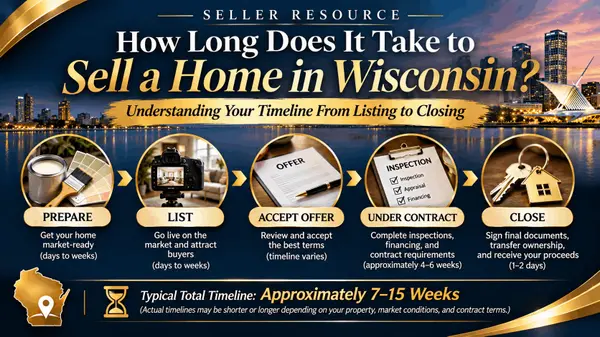

How to Sell a House in Wisconsin: 10 Steps Every Homeowner Should Know

EDUCATE 2 OWN | WISCONSIN SELLER EDUCATION SERIES
How to Sell a House in Wisconsin: 10 Steps Every Homeowner Should Know
Your property. Your goals. Your next chapter.
Thinking about selling your home? Whether you're relocating, downsizing, upgrading, selling an inherited property, or transitioning out of an investment, knowing what to expect can make the experience much easier.
Selling a home in Wisconsin involves several important decisions, from determining your property's value to preparing for closing. Understanding the process can help you avoid unnecessary expenses, reduce stress, and make decisions that support your financial goals.
At Educate 2 Own, we believe education should come before any major real estate decision. This guide explains 10 essential steps to selling a home in Wisconsin so you can move forward with confidence.
You don't have to list your home tomorrow to start exploring your options. Understanding your home's value, potential expenses, and available strategies is a smart first step.
Step 1: Identify Your Selling Goals
Before choosing a listing price or preparing your home, take some time to consider why you're selling.
Common reasons homeowners decide to sell include:
- Relocating for employment or family
- Purchasing a larger or smaller home
- Downsizing after retirement
- Using existing equity toward another property
- Selling an inherited or vacant property
- Reducing maintenance responsibilities
- Moving on from a rental or investment property
Your motivation matters because it influences your pricing, preparation, and timeline.
For example, a homeowner who needs to relocate within 30 days may choose a different strategy than someone who has six months to prepare.
Seller tip: Your strategy should fit your circumstances, not someone else's timeline.
Step 2: Determine What Your Home Is Worth
One of the first questions sellers ask is, "How much is my house worth?"
While online valuation tools can provide a starting estimate, they may not fully account for your property's condition, improvements, layout, or local competition.
A property value review may consider:
- Recent comparable home sales
- Properties currently listed for sale
- Location and surrounding market conditions
- Square footage, bedrooms, and bathrooms
- Age, maintenance, and major improvements
- Buyer demand for similar properties
A comparative market analysis can help estimate a potential listing price range. It is not a formal appraisal or a guarantee of the final selling price.
Curious What Your Home Might Be Worth?
Explore your property's potential value before deciding whether selling makes sense for you.
Request a Property Value ReviewStep 3: Explore Your Selling Options
Not every home needs to be sold the same way. Your property's condition, financial circumstances, and desired timeline can help determine the best approach.
Traditional Listing
Your property is marketed to potential buyers through applicable listing services, professional marketing, showings, and other appropriate channels. Offers are reviewed and negotiated according to your goals.
Selling As-Is
Selling as-is may allow you to avoid completing certain repairs before listing. However, buyers may account for the property's condition when making offers.
An as-is sale does not automatically eliminate applicable Wisconsin disclosure obligations.
Cash Offer
Depending on the property and available programs, a cash offer may provide an alternative to traditional marketing. Compare the proposed purchase price, fees, conditions, closing timeline, and estimated net proceeds before making a decision.
Sell While Buying Another Home
If you're purchasing another property, you may need to coordinate two transactions. Depending on eligibility, financing arrangements and other available solutions may help you manage the transition.
Remember: The goal isn't simply to sell. It's to choose a strategy that makes sense for your situation.
Step 4: Prepare Your Home for the Market
Preparing to sell doesn't necessarily mean spending thousands of dollars on renovations.
Consider starting with:
- Deep cleaning kitchens, bathrooms, and living spaces
- Reducing clutter and organizing storage areas
- Addressing obvious maintenance issues
- Improving lighting and replacing burned-out bulbs
- Maintaining the lawn, walkways, and exterior
- Gathering permits, warranties, and repair records
- Considering staging when appropriate
Some improvements can help buyers appreciate a property's condition and features. Others may cost more than they're likely to contribute to the sale.
Before investing in major updates, discuss which projects are most likely to support your selling goals.
Step 5: Understand Your Listing Agreement
When hiring a real estate brokerage to represent you, you'll generally review a listing agreement outlining the terms of the professional relationship.
Important items to understand include:
- Length of the listing agreement
- Services provided by the brokerage
- Marketing responsibilities
- Compensation arrangements
- Your responsibilities as the seller
- Procedures for communication and negotiations
Real estate brokerage compensation is negotiable and is not set by law. Ask questions about the services you'll receive and any proposed compensation arrangements before signing.
Step 6: Market Your Property
Once your home is ready, the next step is presenting it accurately and effectively to potential buyers.
Depending on the property, a marketing strategy may include:
- Professional real estate photography
- Accurate property descriptions
- Multiple Listing Service (MLS) exposure
- Real estate websites and digital marketing
- Social media promotion
- Open houses or scheduled private showings
- Property-specific marketing materials
Effective marketing isn't just about getting attention. It's about showing the property's features clearly, reaching potential buyers through appropriate channels, and providing the information needed to evaluate the home.
A duplex, condominium, starter home, and luxury property may each benefit from a different marketing approach.
Step 7: Review and Compare Purchase Offers
Receiving an offer is exciting, but the highest price isn't always the best overall offer.
Important terms to review may include:
- Offered purchase price
- Cash purchase or financing type
- Earnest money
- Inspection and financing contingencies
- Proposed closing date
- Requested seller concessions
- Appraisal-related provisions
- Other contractual requirements
For example, an offer with a higher purchase price may also request substantial concessions or include contingencies that affect the transaction.
Reviewing the complete terms can help you understand both the potential financial outcome and the risk associated with each offer.
Step 8: Complete Disclosures and Navigate Inspections
Wisconsin has specific property condition disclosure requirements for many residential real estate transactions.
When Wisconsin's Real Estate Condition Report requirement applies, sellers generally must provide the completed report no later than 10 days after acceptance of the purchase contract. Exceptions and additional legal requirements may apply.
Sellers should answer required disclosure questions truthfully based on their knowledge and seek qualified advice when uncertain about their obligations.
The buyer may also have contractual rights to conduct inspections and request action based on the findings. Any resulting negotiations depend on the accepted contract.
Seller tip: Start gathering information about repairs, previous water intrusion, major systems, and known property conditions before listing. Transparency can help everyone evaluate the property with clearer expectations.
Step 9: Estimate Your Selling Costs and Net Proceeds
Your home's selling price is not necessarily the amount you'll receive after closing.
Depending on the transaction, expenses may include:
- Outstanding mortgage payoff
- Negotiated brokerage compensation
- Applicable title and settlement expenses
- Property tax prorations
- Agreed seller concessions
- Contractual repair expenses
- Other applicable transaction costs
A seller net sheet estimates how much you might receive after anticipated transaction expenses and loan payoffs.
You can use estimates at different sale prices to help determine whether your next move is financially practical. Actual proceeds depend on the final transaction.
Step 10: Prepare for Closing and Your Next Chapter
After contract contingencies and other requirements have been addressed, the transaction moves toward closing.
Before closing, sellers may need to:
- Confirm any agreed repairs are completed
- Coordinate moving and possession arrangements
- Review settlement documents
- Arrange for utilities and address changes
- Provide keys and access devices as agreed
- Complete the final closing requirements
Closing procedures and the timing of funds depend on the contract, lender, title or settlement provider, and other transaction requirements.
Once the sale has been completed, you can focus on what comes next: another home, a different lifestyle, or a new investment opportunity.
Your Wisconsin Home Selling Checklist
Use this quick reference as you begin planning:
- ☐ Identify your goals and ideal timeline
- ☐ Request a property value review
- ☐ Compare selling strategies
- ☐ Review recommended repairs and preparation
- ☐ Understand the listing agreement
- ☐ Prepare your property's marketing materials
- ☐ Review offers and contract terms
- ☐ Complete applicable disclosures
- ☐ Review your estimated net proceeds
- ☐ Prepare for closing and moving
Ready to Explore Your Selling Options?
Whether you're ready to list your property today or simply considering a move in the future, you deserve clear answers and a strategy that supports your goals.
At Educate 2 Own, we help Wisconsin homeowners explore their property value, understand available selling strategies, and prepare for the decisions ahead.
Serving Milwaukee, Wauwatosa, West Allis, Brookfield, Glendale, and communities throughout Wisconsin.
Educate. Empower. Own. Thrive!
Stephanie Stuart, REALTOR®
Educate 2 Own | Brokered by Epique Realty
educate2own.com
Disclaimer: This article provides general educational information and is not legal, tax, or financial advice. Real estate requirements, transaction terms, and available services may vary. Consult appropriate licensed professionals regarding your circumstances.
Categories
Recent Posts