
How to Buy a House in Wisconsin: A Step-by-Step Guide for First-Time Buyers
EDUCATE 2 OWN | HOMEBUYER EDUCATION
Thinking About Buying Your First Home?
Buying your first home is exciting, but it can also feel overwhelming. Between credit scores, mortgage approvals, down payments, and closing costs, there is a lot to learn.
The good news? You don't have to figure everything out on your own.
Whether you're planning to purchase in Milwaukee, Wauwatosa, West Allis, Racine, Madison, or anywhere else in Wisconsin, understanding the process is the first step toward making a confident decision.
At Educate 2 Own, we believe education should come before ownership. Let's walk through the process together.
Step 1: Understand Your Financial Picture
Before shopping for a home, take some time to understand your finances.
Consider:
- Your monthly income and expenses
- Your current debts
- Your credit history
- Your available savings
- How much you're comfortable spending each month
Remember, qualifying for a mortgage amount doesn't necessarily mean you should spend that much.
Your housing payment should leave room for savings, emergencies, maintenance, and the lifestyle you enjoy.
Step 2: Learn About Mortgage Options
There is no single mortgage program that works for everyone.
Common financing options include:
- Conventional Loans: May offer competitive terms and low-down-payment options for qualifying buyers.
- FHA Loans: Government-insured mortgages that may provide flexible qualification guidelines.
- VA Loans: Available to eligible veterans, service members, and certain surviving spouses.
- USDA Loans: May provide no-down-payment opportunities for eligible buyers and properties in qualifying rural areas.
- WHEDA Loans: Wisconsin-specific mortgage programs that may offer affordable financing and down payment assistance.
A knowledgeable mortgage lender can help you compare options based on your specific financial situation.
Step 3: Get Preapproved
A mortgage preapproval helps you understand how much a lender may be willing to finance based on a review of your financial information.
It can also make your home search more focused.
However, preapproval is not a guarantee of final loan approval.
Important: You don't have to buy a home immediately after getting preapproved.
Your timeline should reflect your readiness, financial comfort, and personal goals.
Step 4: Explore Wisconsin Down Payment Assistance
One of the biggest misconceptions about buying a home is that everyone needs a 20% down payment.
That's simply not true.
Depending on eligibility, buyers may qualify for financing programs requiring significantly less upfront.
Wisconsin also offers homebuyer assistance through organizations such as the Wisconsin Housing and Economic Development Authority (WHEDA).
Some assistance programs provide additional financing toward down payments or closing costs.
Keep in mind that assistance isn't always free money. Some programs involve second mortgages, repayment requirements, or other conditions.
Program eligibility and funding can change, so confirm current options with an approved lender.
Explore WHEDA Homebuyer Programs →
Step 5: Choose Your Real Estate Professional
Your real estate agent should do more than unlock doors.
A strong agent helps you understand property values, market conditions, financing considerations, contract terms, and the responsibilities of homeownership.
Before beginning your search, discuss your goals, expectations, representation options, and any required agency agreements.
Most importantly, choose someone who makes you feel informed and comfortable asking questions.
Step 6: Begin Your Home Search
Now comes the fun part!
Start by identifying your priorities.
- Preferred locations
- Number of bedrooms and bathrooms
- Monthly housing budget
- Parking and transportation needs
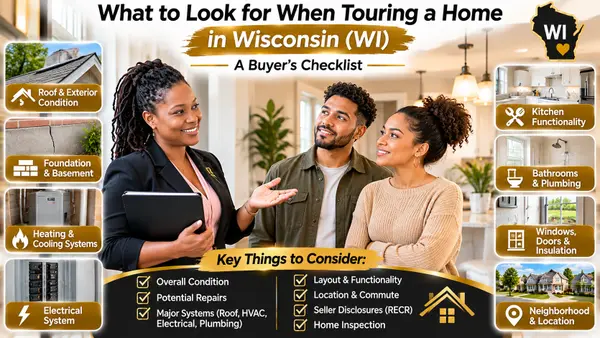
- Property condition
- Potential maintenance and repair costs
Don't overlook duplexes, condos, or other property types that may fit your financial and lifestyle goals.
For some buyers, purchasing a duplex and renting out another unit may be worth exploring as a long-term wealth-building strategy.
Step 7: Make an Offer
Once you find a home you love, your agent can help you evaluate the asking price, comparable sales, property condition, and potential offer terms.
An offer may include:
- Purchase price
- Earnest money
- Financing terms
- Inspection contingencies
- Closing date
- Other negotiated conditions
Your offer should reflect your comfort level and financial circumstances.
Never feel pressured to waive protections you don't fully understand.
Step 8: Complete Inspections and Appraisal
After an accepted offer, the transaction moves into the due diligence and financing stages.
A home inspection helps you better understand the property's condition.
An appraisal, when required by your lender, helps evaluate the property's value for financing purposes.
These are different processes, and both can play important roles in your purchase.
Depending on your contract, you may have opportunities to address certain concerns before closing.
Step 9: Finalize Your Mortgage
During underwriting, your lender reviews financial documentation, property information, and other details necessary for final approval.
To help avoid delays:
- Respond promptly to lender requests.
- Avoid opening unnecessary new credit accounts.
- Discuss major purchases with your lender.
- Maintain accurate financial documentation.
- Ask questions whenever something is unclear.
For most standard mortgage purchases, you'll receive a Closing Disclosure at least three business days before closing.
Review it carefully so you understand your final loan terms and estimated amount due.
Step 10: Closing Day!
You've made it to the final step.
At closing, you'll review and sign the required documents, complete your financial obligations, and finalize the transaction.
Once everything is completed and possession is available under your contract, it's time to enjoy your new home!
But remember, ownership doesn't end at closing.
Budgeting for maintenance, understanding your property taxes, and protecting your investment are all important parts of successful homeownership.
Frequently Asked Questions
Do I need 20% down to buy a house?
No. Some mortgage programs allow much smaller down payments for qualified borrowers.
Can I buy a home with less-than-perfect credit?
Possibly. Credit requirements vary by lender and loan program. A mortgage professional can help you understand your options.
Do I have to be a first-time buyer to use WHEDA?
Not necessarily. Some WHEDA programs are available to qualifying repeat buyers.
How long does buying a house take?
It depends on your financing, property search, contract terms, and other circumstances. Some buyers move quickly, while others spend months preparing.
Should I contact an agent before getting preapproved?
Absolutely! An educational consultation can help you understand the process and identify the steps you should take before purchasing.
Continue Your Homebuying Education
Every successful homeownership journey begins with education and preparation! Explore these additional Educate 2 Own resources to evaluate your financial readiness, understand the costs of purchasing a home, and choose the right professional to guide you.
Your Journey Starts With Education
Whether you're ready to buy today or planning for the future, you deserve guidance that puts your goals first.
I'm Stephanie Stuart, REALTOR® with Epique Realty and founder of Educate 2 Own.
My mission is to help individuals and families make informed real estate decisions while exploring opportunities for long-term financial stability and wealth building.
Let's talk about your goals and create a plan that works for you.
Educate. Empower. Own. Thrive!
Educational information only. Mortgage program requirements, financing terms, and assistance availability are subject to change. Consult qualified lending and real estate professionals regarding your specific circumstances.
Stephanie Stuart, REALTOR® | Brokered by Epique Realty
Recent Posts