
What Happens After Mortgage Preapproval? A Wisconsin Homebuyer's Guide

EDUCATE 2 OWN | FIRST-TIME HOMEBUYER SERIES
You're Preapproved! Now What?
Congratulations! You've taken an important step toward becoming a homeowner.
But now you might be wondering: Do I start looking at houses immediately? How long do I have? What happens if I find a home tomorrow?
Here's something I want every buyer to understand: Getting preapproved doesn't mean you have to purchase a home right away.
Preapproval gives you information about your potential financing options. What you do next depends on your goals, comfort level, and readiness.
Let's walk through what happens next.
Step 1: Review Your Preapproval Carefully
Before scheduling home tours, review the details of your preapproval with your lender.
Ask questions such as:
- What is my estimated maximum loan amount?
- What would my monthly payment look like?
- Does that payment include property taxes and insurance?
- Will I need mortgage insurance?
- How much money should I expect to bring to closing?
- When does my preapproval expire?
- Are there any conditions I still need to satisfy?
Remember: Your maximum approved amount is not necessarily your ideal purchase price.
A comfortable monthly payment should leave room for savings, maintenance, family responsibilities, and the lifestyle you want to maintain.
Ask your lender to estimate monthly payments at several purchase prices. Just because you're approved for $250,000 doesn't mean you have to shop at $250,000.
Step 2: Choose Your REALTOR®
Your real estate professional should help you understand the buying process, not pressure you into making decisions.
Before touring homes, discuss:
- Your preferred locations
- Your comfortable monthly budget
- Property types you're interested in
- Your desired timeline
- How buyer representation works
- Agency agreements and compensation arrangements
In Wisconsin, written agreements and agency relationships can affect how your REALTOR® represents you. Make sure you understand the terms before signing.
A good working relationship should allow you to ask questions freely and make informed decisions.
Step 3: Build Your Home Search
Now it's time to identify what matters most in your future home.
Consider your must-haves and preferences.
- Number of bedrooms and bathrooms
- Preferred neighborhoods or cities
- Parking or garage requirements
- Yard and outdoor space
- Property condition
- Commute and transportation
- Potential maintenance expenses
- Single-family home, condo, or duplex
Be realistic about the difference between something you need and something you would simply enjoy having.
You might discover that a home you originally overlooked could be a great fit.
Step 4: Start Touring Homes
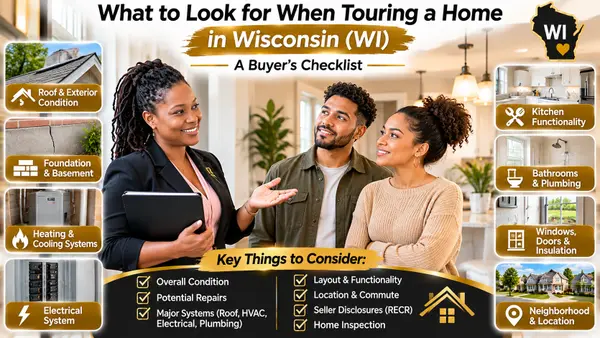
Home tours are your opportunity to learn about properties beyond what you see in listing photos.
Pay attention to:
- Visible signs of water damage
- Roof and exterior conditions
- Heating and cooling systems
- Windows and doors
- Foundation concerns
- Electrical and plumbing features
- Potential repair expenses
You don't have to know everything about home construction. That's why inspections and qualified professionals are important.
And remember, a beautifully decorated home isn't necessarily a well-maintained home.
Step 5: What Happens If You Find a Home Quickly?
Sometimes buyers search for months. Other times, they find a home they love during their first week.
If you find a property you're interested in, your REALTOR® can help you evaluate comparable sales, property information, market conditions, and potential offer terms.
You'll discuss important decisions such as:
- Offer price
- Earnest money
- Financing contingency
- Inspection contingency
- Closing date
- Other negotiated terms
Finding a home quickly doesn't mean you should skip important questions.
Never feel pressured to waive protections you don't understand.
Step 6: Your Offer Is Accepted. What's Next?
Once an offer is accepted, the homebuying process becomes more structured.
Your purchase contract establishes deadlines that may include inspections, financing, and other agreed-upon conditions.
Depending on your transaction, you may need to:
- Submit earnest money according to the contract.
- Complete your formal mortgage application or update your lender.
- Schedule inspections within the contractual deadline.
- Review inspection findings and discuss any available contractual options.
- Work with your lender on the appraisal and underwriting process.
- Provide updated financial documents when requested.
- Prepare for closing.
Every transaction is different. Your REALTOR®, lender, and closing professionals should help you understand the deadlines that apply to your purchase.
Step 7: Understanding Your Homebuying Timeline
One of the most common questions buyers ask is, "How fast can I get my keys?"
There isn't one timeline that applies to everyone.
The Fast Route
You're financially prepared, know what you want, and find a suitable property quickly.
If the seller accepts your offer and financing and contractual conditions proceed smoothly, the purchase may move toward closing relatively quickly.
The Slower Route
You're still exploring neighborhoods, comparing properties, saving additional money, or deciding whether homeownership is right for you.
Your search might take several months or longer.
Neither approach is wrong.
Once you're under contract, however, you must follow the agreed deadlines or negotiate changes with the other parties.
Before signing an offer, make sure the proposed timeline is realistic for you and your lender.
Step 8: What If Your Preapproval Expires?
Don't panic!
Mortgage preapproval letters commonly have expiration dates, often around 30 to 90 days, depending on the lender.
If yours expires before you find a home, contact your lender.
They may request updated information, including:
- Recent pay stubs
- Bank statements
- Employment verification
- Updated debt information
- Another credit review
Your lender can explain whether you remain eligible and what is required to issue an updated letter.
You don't lose your opportunity to become a homeowner because your preapproval expired.
Step 9: Protect Your Preapproval
While preparing to purchase, avoid making major financial changes without discussing them with your lender.
Examples include:
- Financing a new vehicle
- Opening new credit accounts
- Making large purchases on credit
- Changing jobs or income arrangements
- Taking on additional debt
- Moving large amounts of money without documentation
These changes don't automatically mean your mortgage will be denied, but they may affect underwriting or require additional documentation.
Communicate with your lender before making major financial decisions.
Step 10: Prepare for Closing Day
As closing approaches, your lender and closing professionals will help you finalize the necessary steps.
For most standard mortgage purchases, you must receive your Closing Disclosure at least three business days before closing.
This document outlines your final loan terms and closing costs.
Review it carefully and ask questions about anything you don't understand.
You may also have an opportunity to complete a final property walkthrough according to your contract.
Once the transaction is finalized and possession is available under the purchase agreement, you can receive your keys!
Learn More About Reviewing Closing Documents →
Frequently Asked Questions
Do I have to start shopping immediately after preapproval?
No. You can begin when you're comfortable and ready.
What happens if I find a house the day after getting preapproved?
You can discuss making an offer with your REALTOR®. Your lender should confirm financing details, and the purchase remains subject to the contract and loan approval process.
Can I look at homes below my preapproval amount?
Absolutely! Shopping below your maximum approved amount can help you maintain a comfortable monthly budget.
What happens if I don't find a home before my preapproval expires?
Your lender may be able to update your information and issue a new preapproval letter.
Do I have to use the lender who preapproved me?
Generally, no. You may compare lenders and loan offers. If you're already under contract, discuss how switching lenders could affect financing and closing deadlines.
Can I decide not to buy after getting preapproved?
Yes. Preapproval alone does not require you to purchase a home.
Continue Your Homebuying Education
You've received your mortgage preapproval. Now what? Explore these helpful resources to understand the next steps, choose the right real estate professional, and prepare to find your future home.
Your Timeline. Your Goals. Your Future.
Homeownership should be an informed decision, not a rushed one.
I'm Stephanie Stuart, REALTOR® with Epique Realty and founder of Educate 2 Own.
Whether you're ready to tour homes tomorrow or planning several months ahead, I'm here to help you understand your options and navigate the Wisconsin real estate market.
Let's build a homebuying plan around your goals.
Educate. Empower. Own. Thrive!
Educational information only. Preapproval requirements, mortgage processing times, contractual deadlines, and closing procedures vary. Consult qualified real estate and mortgage professionals regarding your specific circumstances.
Stephanie Stuart, REALTOR® | Brokered by Epique Realty
Recent Posts